Pinterest searches for men's gold earring designs rose 850% in 2026 - and Indian grooms are finally dressing like they mean it. Here's every jewellery piece worth considering, function by function, outfit by outfit, budget by budget.
Men's Wedding Jewellery 2026: Gold Earrings, Chains, and Accessories for Grooms
For most Indian weddings, groom jewellery is an afterthought. The family spends months on the bridal set. Three days before the wedding, someone asks: "What is he going to wear?"
That's changing fast. Pinterest searches for "gold earring designs for men" rose 850% in India between 2025 and 2026. Grooms are showing up to their own weddings with layered chains, statement ear studs, and waist belts - and the results are ending up in every wedding reel worth watching.
The modern Indian groom has real choices now. This guide covers all of them - every jewellery piece, every function it suits, every outfit it works with, and the price range to expect in 2026.
Why Groom Jewellery Is Having a Moment in 2026
Why Groom Jewellery Is Having a Moment in 2026
It's not a new trend so much as a return. Kings and royal courts in India historically wore as much jewellery as the women around them - layered necklaces, rings on multiple fingers, heavy kadas, ornate ear jewellery. It was never the jewellery that was unusual. It was the decades of plainness that were the exception.
What's changed in 2026 is three things. First, social media - specifically wedding reels - has made the groom's look visible in a way it never was in photo albums. Second, younger grooms are more comfortable with styling and self-expression than their fathers were. Third, the market has responded: there are now dedicated groom jewellery collections from major Indian jewellers that didn't exist five years ago.
The result is that a groom who wears nothing but a sehra and a brooch no longer looks traditionally understated - he just looks underdressed.
The 8 Jewellery Pieces Every Groom Should Know
The 8 Jewellery Pieces Every Groom Should Know
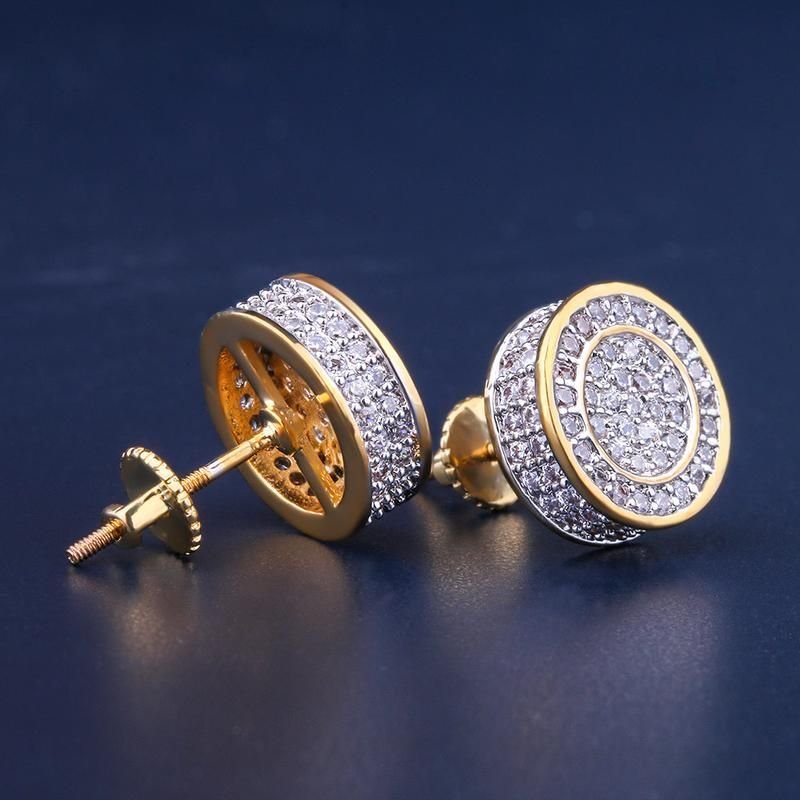
1. Ear Studs and Earrings
This is the category that's seeing the biggest spike in interest - and the one that surprises most families until they see it on the groom.
Men's ear jewellery for weddings in India isn't new - it's culturally rooted across many communities, from South Indian traditions to Rajasthani customs. What's new in 2026 is how it's being worn by grooms who don't come from those traditions.
The styles trending for grooms in 2026:
- Diamond or CZ studs - The most versatile option. A single small stud in one ear reads as subtle and deliberate. Works with every outfit from sherwani to bandhgala. Best for grooms who want to try ear jewellery without committing to a statement.
- Gold hoop (thin) - A slim gold hoop in one ear reads as modern and confident. Pairs well with reception Indo-western looks and sangeet outfits. Less traditional, more fashion-forward.
- Kundan or polki earring - One ornate earring - usually a small drop or stud with kundan work - worn for the wedding ceremony. Ties in directly with the sherwani's embroidery. This is the style closest to traditional groom jewellery across communities.
- Layered piercings - For grooms who already wear jewellery, 2026's biggest styling choice is wearing a stud and a small hoop together in one ear. Works for sangeet and mehendi, not the main ceremony.
What to avoid: Large chandelier or jhumka styles meant for bridal sets. The goal is complementing the sherwani, not competing with it.
Price range: Gold studs ₹3,000-₹25,000. Diamond studs ₹8,000-₹80,000. Kundan or polki earring ₹2,000-₹15,000.
2. Mala and Necklace
2. Mala and Necklace
The mala is the most traditional groom jewellery piece across most Indian communities - and also the one with the most variation in how it's worn today.
The classic mala: A single string of gold beads or pearls with a pendant. Sits over the sherwani at the centre of the chest. Symbolic across Hindu wedding rituals. Simple, dignified, and works at any budget.
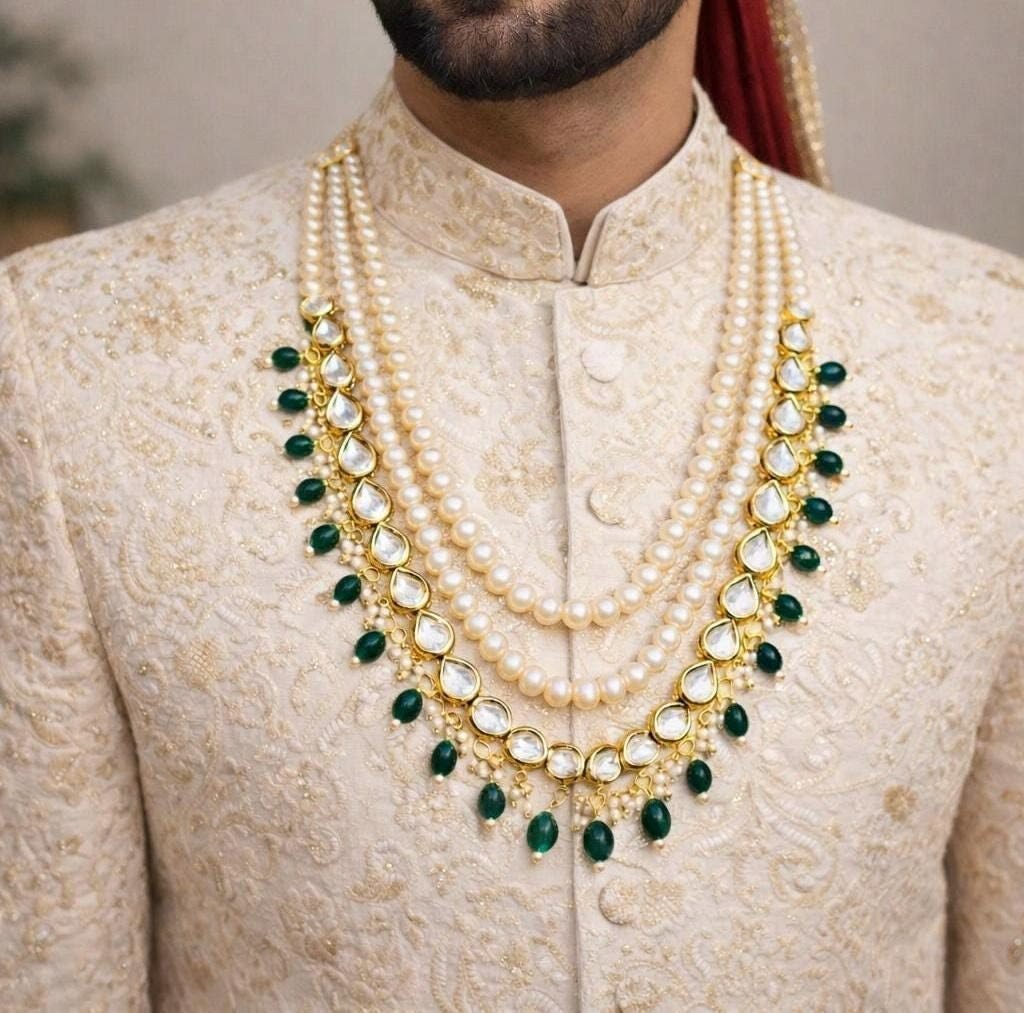
The layered pearl and bead necklace: The most-photographed groom neck piece of 2026. Two to three strands of pearls or gold beads worn together - sometimes with a small pendant, sometimes without. Works best with rich-toned sherwanis (navy, bottle green, maroon, ivory) where the contrast shows.
The Saathlada necklace: Seven strands of pearls, each with a gold and gemstone pendant. Traditional to Hyderabadi weddings but increasingly adopted by grooms across the country for its visual impact. Heavy and ornate - best worn for the main ceremony and removed for the reception.
The Puligoru pendant: A South Indian tradition gaining national visibility. A gold pendant shaped like a tiger claw - often set with gemstones - worn on a pearl or bead chain. Strong, rooted, and distinctive. If you want something with cultural depth, this is worth knowing.
Layered chain + pendant (modern): For sangeet or reception looks, a layered gold or vermeil chain with a minimal pendant reads as fashion-forward without being costume-like. Works especially well with Indo-western bandhgalas and structured jackets.
Price range: Basic gold mala ₹15,000-₹60,000. Pearl layered necklace ₹8,000-₹40,000. Saathlada ₹25,000-₹1.5L. Modern layered chain ₹5,000-₹30,000.
3. Kada (Bracelet)
3. Kada (Bracelet)
The kada is the second most common groom jewellery piece after the mala - and the one that makes the biggest difference in photographs.
A thick gold or silver kada on one wrist adds visual weight to the groom's look without requiring any styling commitment elsewhere. It reads in close-up shots, in candid frames, and especially during ring exchange and phera photography.
Styles in 2026:
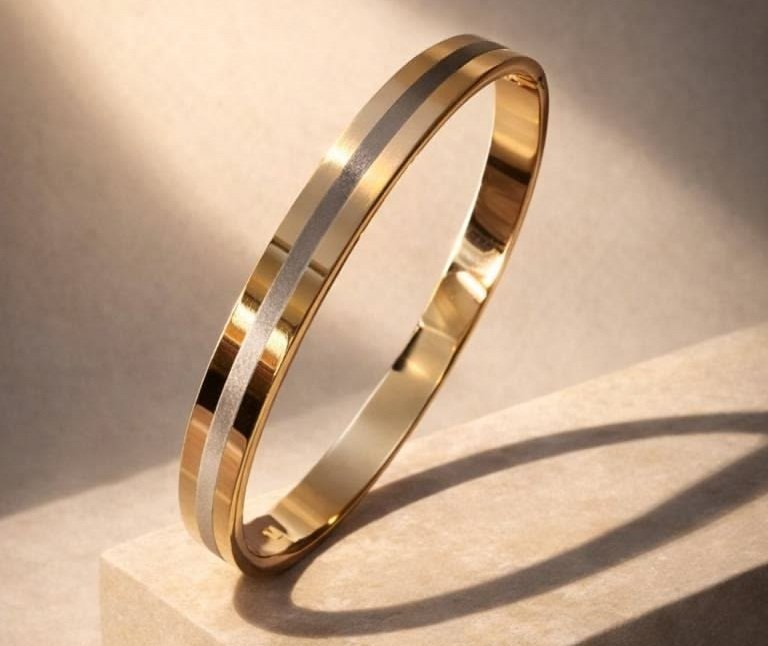
- Classic gold kada - Plain, broad, and heavy. Traditional and timeless. Works with every sherwani colour.
- Kundan or stone-set kada - An ornate kada with kundan or gemstone work that mirrors the sherwani's embroidery. Higher impact, slightly harder to style around.
- Silver kada - Better for cooler-toned outfits (grey, silver, dark blue). Also a practical choice for grooms who find yellow gold doesn't suit their skin tone.
- Thin bracelet (mehendi or sangeet) - For pre-wedding functions where a full kada feels too heavy, a thin gold or silver bracelet - or a beaded bracelet - gives the same intentionality without the weight.
One key rule: Wear the kada on one wrist only. Wearing on both reads as too deliberate. One wrist looks styled; two looks costumed.
Price range: Plain gold kada ₹12,000-₹80,000. Kundan kada ₹8,000-₹50,000. Silver kada ₹2,000-₹15,000.
4. Ring
4. Ring
Most grooms already plan to wear the wedding band. What's shifting in 2026 is wearing intentional rings for pre-wedding functions too.
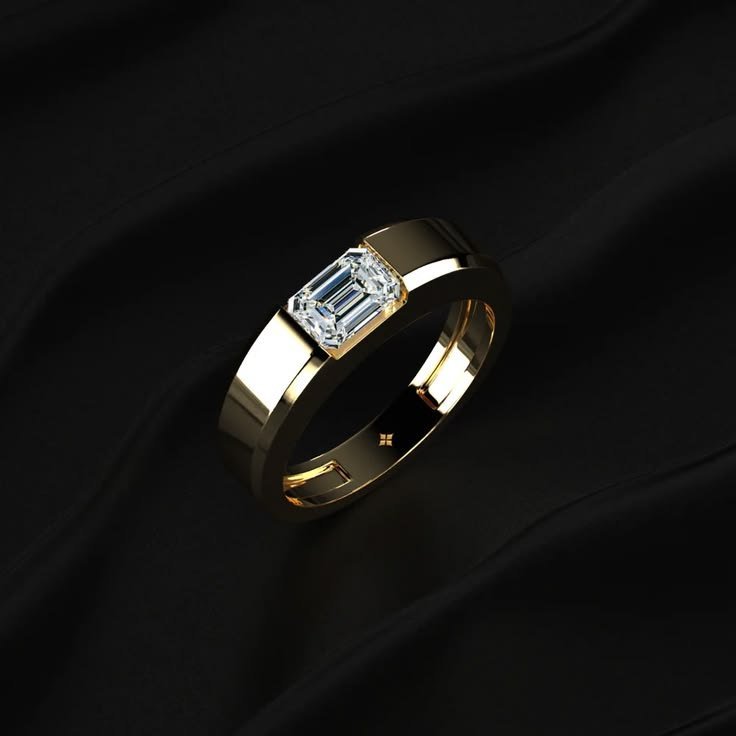
Wedding day: The classic engagement or wedding band. If you want to upgrade, a gold band with a single diamond or emerald reads better in photographs than a plain band - the stone catches light in ways that plain metal doesn't.
Sangeet and reception: A signet ring or a single stone cocktail ring on the right hand. Works especially well with Indo-western reception looks where the sherwani is less ornate and the jewellery can do more work.
Multiple rings: Wearing two or three rings across both hands is a 2026 trend for pre-wedding functions - one thin band, one textured ring, one stone ring. Pulls the look together without requiring a necklace or earring to do the heavy lifting.
Price range: Gold wedding band ₹8,000-₹60,000. Diamond solitaire ring ₹15,000-₹3L. Fashion rings for pre-wedding ₹2,000-₹20,000.
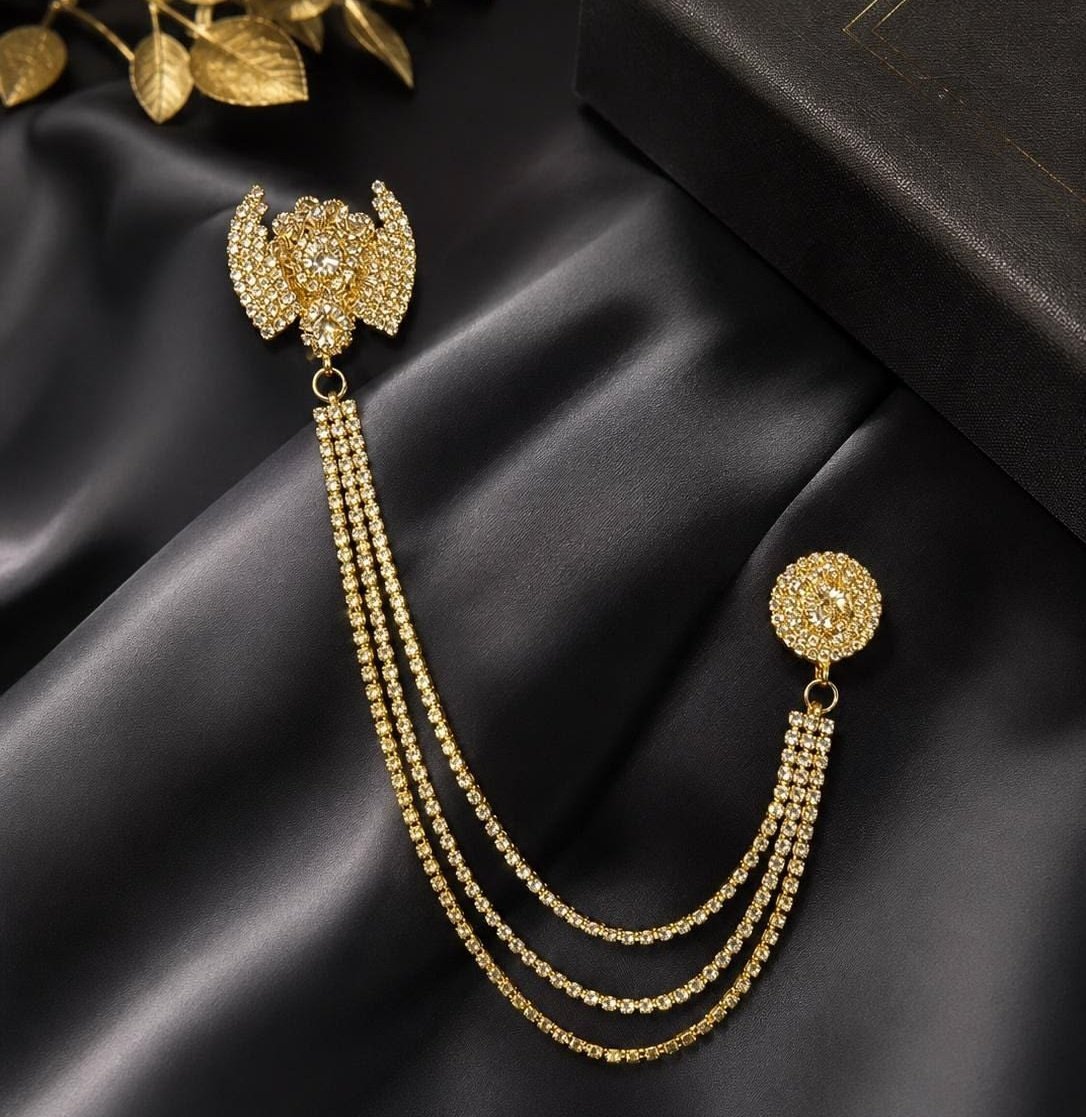
5. Brooch (Sherwani Pin)
5. Brooch (Sherwani Pin)
The brooch is one of the most underused groom accessories - and one of the highest-impact ones when chosen well.
A well-placed brooch on the left chest of a sherwani or bandhgala does what a pocket square does for a suit: it signals that the look was thought about. It's also one of the easiest ways to add jewellery to a look that already has a lot going on elsewhere.
Styles:
- Kundan or polki brooch - The most traditional. Ornate, gold-toned, with stone work that mirrors the sherwani's embellishment. Works best with heavy sherwanis where the brooch is one element among many.
- Pearl-accented brooch - A smaller, lighter brooch with pearl detail. Better for grooms who want a subtle touch rather than a statement piece.
- Enamel or meenakari brooch - Colourful, distinctive, and increasingly popular for grooms who want their personality to show. A teal or cobalt enamel brooch on a cream sherwani is one of 2026's most recognisable groom looks.
Price range: ₹1,500-₹20,000 depending on material and craftsmanship.
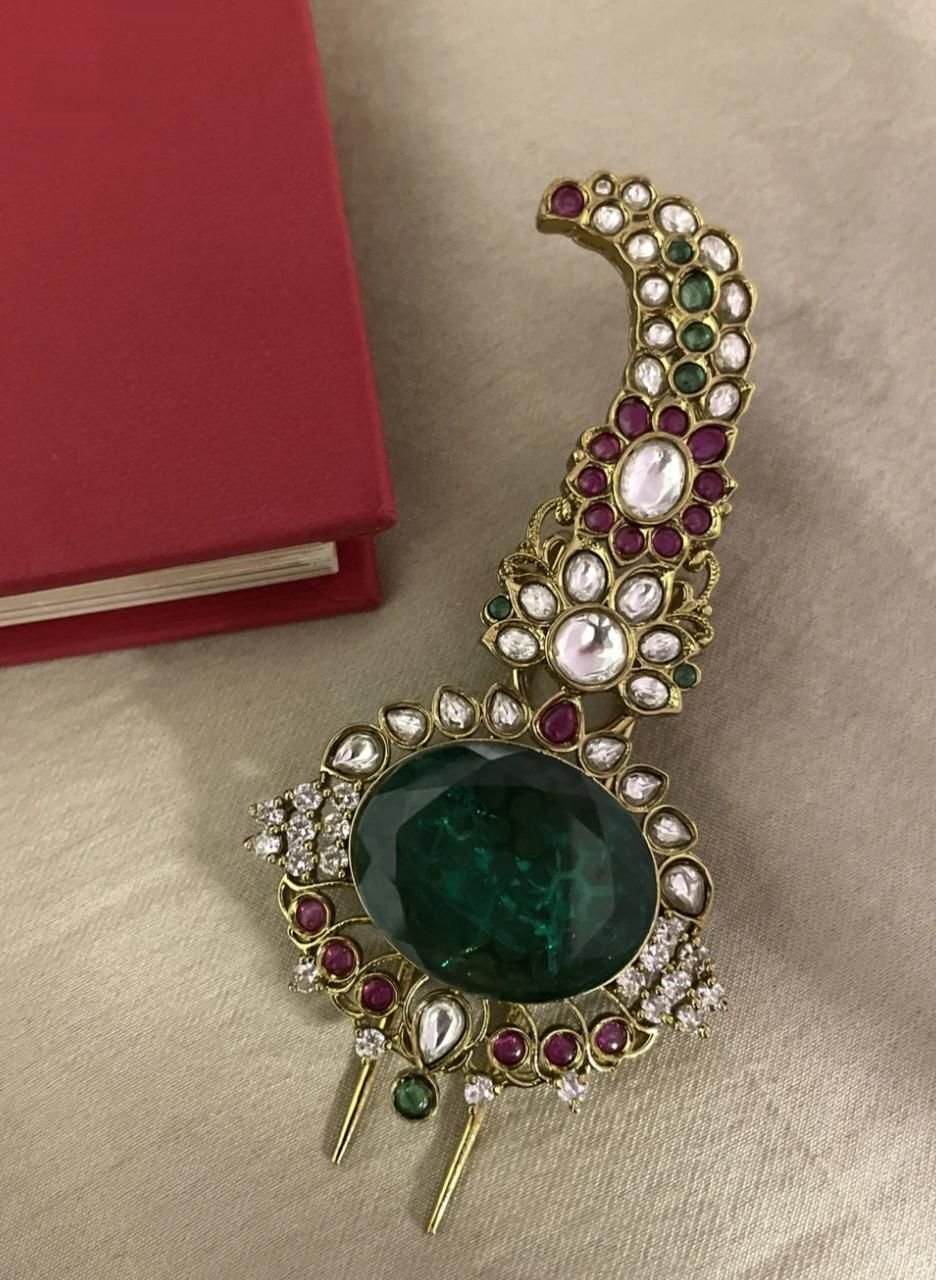
6. Kalangi (Turban Ornament)
6. Kalangi (Turban Ornament)
If you're wearing a safa or pagdi for the wedding ceremony, the kalangi is non-negotiable.
A kalangi is the ornamental pin or feather embellishment worn at the front of the groom's turban. It's one of the most photographed elements of the groom's look - it appears in every close-up, every portrait, and most baraat shots.
Styles in 2026:
- Classic feather kalangi - A gold-set ornament with a feather (real or artificial) extending upward. Regal and traditional. The default choice for North Indian weddings.
- Kundan kalangi - An ornate jewelled piece without the feather. Shorter, more structured, works well for indoor functions where a large feather becomes impractical.
- Contemporary kalangi - A sleeker, more minimal design with clean gold lines and a single stone centre. For grooms who want to acknowledge the tradition without wearing a full royal court piece.
Important: Match the kalangi metal to your other jewellery. If you're wearing gold throughout, a silver kalangi creates a jarring inconsistency that shows in photographs.
Price range: ₹2,000-₹40,000 depending on material. Artificial pieces for a single day's wear: ₹1,000-₹8,000.
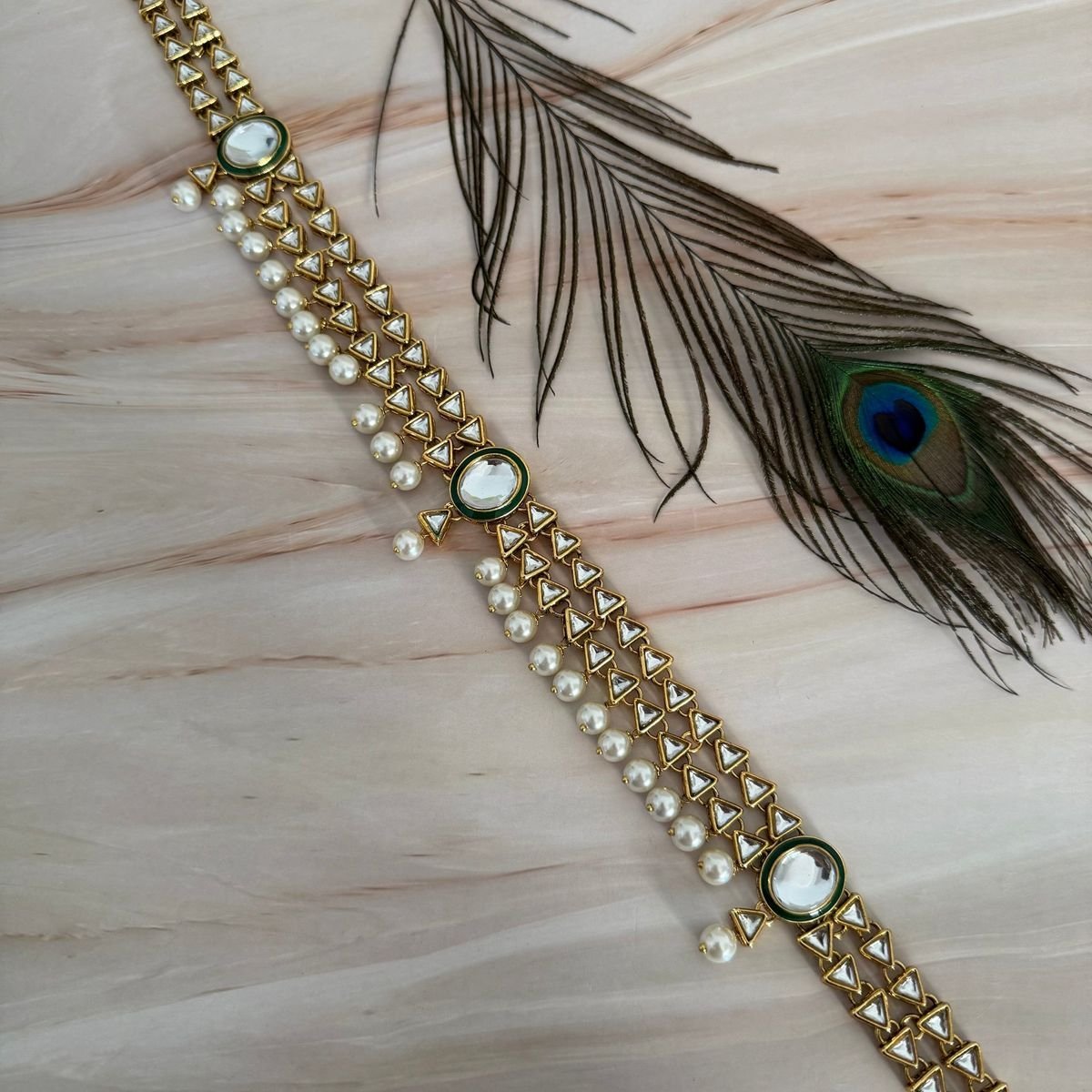
7. Waist Belt (Kamarbandh)
7. Waist Belt (Kamarbandh)
The groom's waist belt is the one piece most families don't consider - and the one that most reliably makes the sherwani photograph like a couture piece.
A gold or gemstone-set waist belt worn over the sherwani at the waist does two things: it defines the groom's silhouette (which heavy sherwanis often blur), and it adds a layer of regality that no other accessory achieves.
It's been a staple of South Indian groom dressing for decades. In 2026, it's crossing over into North Indian and pan-Indian wedding aesthetics as more grooms and stylists adopt it.
Style note: Keep everything else minimal if you're wearing a waist belt. It's a statement piece - a full necklace, kalangi, and earrings alongside a belt is likely too much. Choose two to three other pieces, not five.
Price range: ₹5,000-₹80,000. Rental available in most metro cities for ₹2,000-₹15,000 per day.
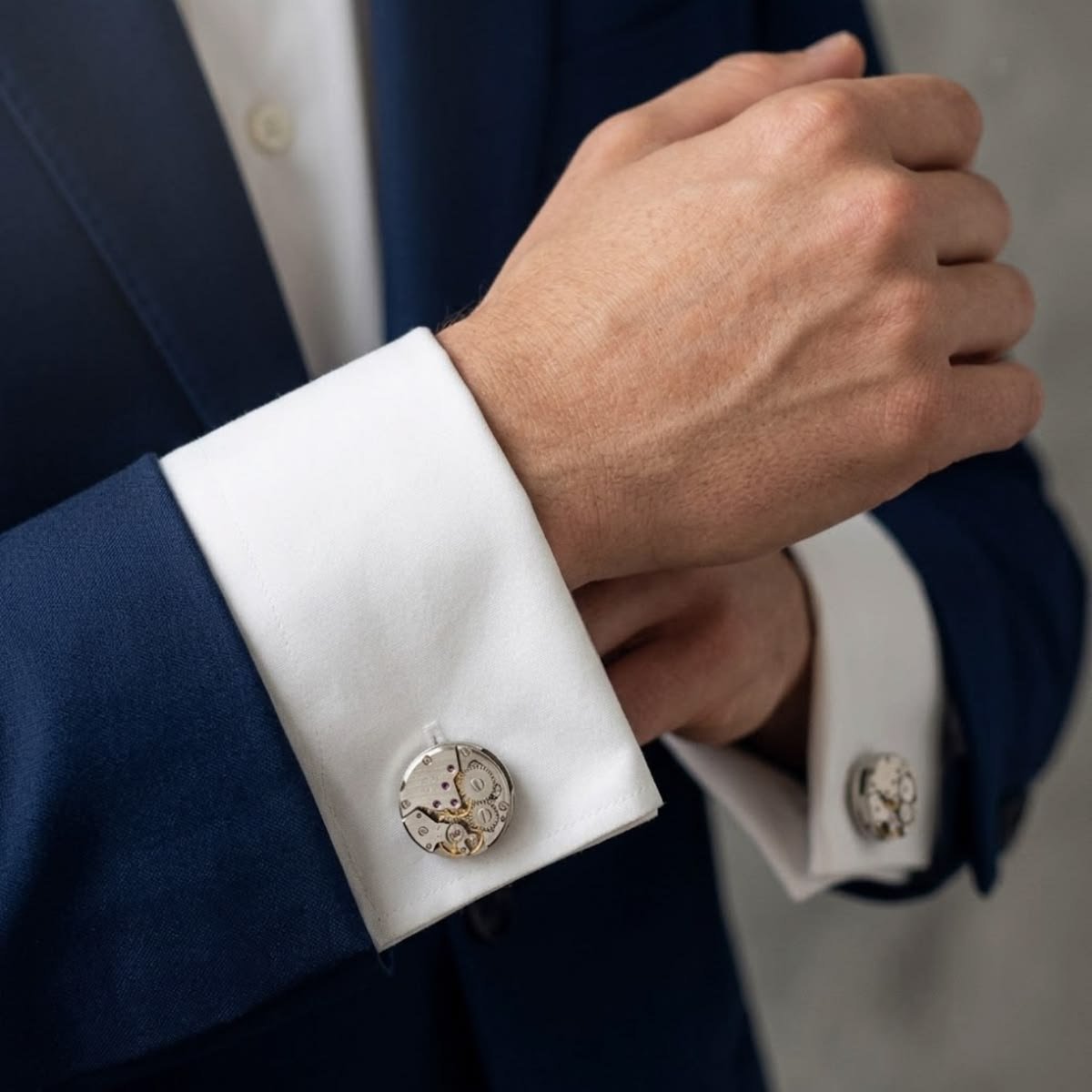
8. Cufflinks and Watch
8. Cufflinks and Watch
Often overlooked as jewellery, cufflinks and a watch are in practice the groom's most visible accessories after the sherwani and turban - because hands and wrists are in every photograph.
Cufflinks: Gold, silver, or stone-set. The design should mirror something else in the look - if the sherwani has emerald green embroidery, green stone cufflinks tie the look together. Avoid novelty designs (initials, miniature objects) for the main ceremony. Simple elegance works.
Watch: The debate about whether a groom should wear a watch is real. The practical answer: wear one for the reception and banquet functions where a suit or bandhgala is involved. Skip it for the main ceremony where the sherwani is heavy and traditional - a watch reads as out of place next to a mala and kada.
If wearing a watch, the metal should match the jewellery metal. A silver watch with gold jewellery is a common mistake that reads clearly in photographs.
Price range: Cufflinks ₹800-₹15,000. This is not the function to wear your real watch - ceremonial wear risks damage.
What to Wear for Each Function
What to Wear for Each Function
One of the most useful shifts in 2026 groom styling is thinking about jewellery function by function - not as a single look worn throughout.
Haldi: Skip jewellery entirely or wear one thin bracelet. You will get stained. Anything you care about will be ruined.
Mehendi: Light and casual. A silver or beaded bracelet, a thin chain, one ring. Match the relaxed energy of the function.
Sangeet: This is where grooms have the most creative freedom. Layered chains, a fashion ring, a statement hoop in one ear if you wear earrings - the sangeet light (DJ lighting, spotlights) makes jewellery look its best. Lean into it.
Wedding ceremony: Traditional and intentional. Mala, kalangi, kada, brooch - the full traditional set. This is the function that photographs the most. Wear what feels rooted and significant, not just stylish.
Reception: Minimal and polished. If the reception look is more contemporary - a bandhgala or Indo-western suit - pare down to a chain, cufflinks, and a clean ring. The wedding ceremony is the moment for traditional ornamentation. The reception is the moment for refinement.
Budget Guide for Groom Jewellery in 2026
Budget Guide for Groom Jewellery in 2026
- Under ₹10,000: A good brooch, a CZ stud or ear pin, and a basic kada. Looks intentional and complete without breaking the budget. Buy over rent at this range.
- ₹10,000-₹40,000: A pearl mala, a kundan kada, a kalangi, and a brooch. The full traditional groom set. This is where most Tier 1 and Tier 2 wedding budgets land for groom jewellery.
- ₹40,000-₹1.5L: Real gold in one or two pieces (typically the mala and kada), with everything else being high-quality costume jewellery or gold-plated pieces. A smart mix that photographs identically to an all-gold set.
- ₹1.5L and above: Real gold throughout, diamond or gemstone accents on key pieces, possibly a bespoke waist belt. For grooms where jewellery is a priority or families where gold gifting is part of the wedding tradition.
- Rent vs buy: For pieces you'll wear once - a heavy waist belt, a full Saathlada necklace, an elaborate kalangi - rental is smart. Most major cities now have groom jewellery rental services at ₹2,000-₹15,000 per piece per day. For pieces that double as investments (gold kada, wedding band), buying makes more sense.
The One Rule That Covers Everything
More is not more. Pick three to four pieces maximum for any single function. A groom wearing well-chosen, thoughtfully matched jewellery for each ceremony looks intentional. A groom wearing every piece he owns to every function looks like he doesn't know what he's doing.
Know your sherwani colour before you buy. Decide your non-negotiables (most grooms have one or two pieces they care about) and build around those. And if your family insists on pieces you wouldn't choose yourself, wear them for the ceremony and switch for the reception.
The goal isn't to look like a jewellery ad. It's to look like yourself, dressed for the most important day of your life.
Looking for bridal makeup artists, photographers, or wedding stylists for the big day? Browse verified vendors on Eventam - from bridal beauty and makeup to photographers and wedding planners across every city in India.