Every professional wedding planner runs on systems, not memory. Here's every document, template, app, and habit that makes up a solid wedding planning toolkit in 2026 - built specifically for the Indian wedding market.
How to Build a Wedding Planning Toolkit from Scratch in 2026
4. The Welcome Packet
Most new wedding planners make the same mistake: they start taking clients before they have systems.
They rely on memory to track vendor payments. They manage client communication across 6 WhatsApp chats. They build the wedding day timeline in their head. And then something slips - a vendor doesn't show, a payment is missed, a function runs 45 minutes late - and the client blames the planner.
The difference between a planner who survives their first year and one who builds a real business is almost always systems. Specifically, a toolkit - a set of documents, templates, apps, and habits that means nothing falls through the cracks regardless of how chaotic the wedding week gets.
This guide builds that toolkit from scratch, piece by piece, for the Indian wedding market in 2026. Whether you're planning your first wedding or your fiftieth, every item here earns its place.
What a Wedding Planning Toolkit Actually Is
What a Wedding Planning Toolkit Actually Is
A toolkit isn't a single app or a single spreadsheet. It's a complete operating system for every wedding you manage - from the first client call to the final vendor payment.
A complete toolkit has four layers:
- Client-facing documents - what the client sees and signs
- Internal planning documents - what you work from behind the scenes
- Vendor management documents - how you track and coordinate every vendor
- Day-of tools - what runs the actual wedding day
Each layer is covered below, with the exact documents you need and what goes inside them.
1. The Discovery Questionnaire
1. The Discovery Questionnaire
Before you write a proposal or quote a price, you need to understand the wedding. A discovery questionnaire is a structured form - sent before the first call or filled out during it - that captures the basics.
What it should cover:
- Wedding date and city
- Number of functions (mehendi, haldi, sangeet, wedding, reception)
- Approximate guest count per function
- Total budget range
- Venue status (booked, shortlisted, not started)
- Vendors already booked
- Non-negotiables (things they will not compromise on)
- How they found you
Keep it under 15 questions. Long questionnaires get abandoned. The goal is to walk into the first call already knowing enough to have a real conversation.
2. The Planning Proposal
2. The Planning Proposal
The proposal is your sales document. It should show the client exactly what they're getting, at what price, and why you're the right planner for their wedding.
A strong proposal includes:
- A brief summary of what you understood from the discovery call
- The scope of services (full planning, partial planning, or day-of coordination)
- A clear list of what is and is not included
- Your planning process - how you'll work together month by month
- Your fee structure and payment schedule
- Two or three references or testimonials
- A call to action with a deadline
Keep proposals to 4-6 pages. Longer than that and clients don't read them. Shorter than that and you look like you didn't think it through.
3. The Planning Contract
3. The Planning Contract
Never start work without a signed contract. This is non-negotiable.
- A wedding planning contract for India should cover:
- Names and contact details of both parties
- Wedding date, city, and list of functions covered
- Scope of services - precisely what you will and will not do
- Your fee, payment schedule, and late payment terms
- Cancellation and postponement policy (what happens if the wedding moves or cancels)
- Force majeure clause (what happens in events outside anyone's control)
- Client responsibilities - what you need from them to do your job
- Vendor liability - clarifying that you are coordinating vendors, not responsible for their performance
- Dispute resolution
Have a lawyer review your contract template once. The cost is worth it.
4. The Welcome Packet
Sent after the contract is signed, the welcome packet sets the tone for the entire planning relationship. It tells the client how you work, what to expect, and how to communicate with you.
Include:
- Your working hours and preferred communication channel
- Response time commitment (e.g. "I respond to all messages within 24 hours on weekdays")
- What decisions you need from them in the first 30 days
- An introduction to your planning tools (if you use a shared platform)
- A link to your planning questionnaires (venue preferences, decor mood board, catering preferences)
Clients who feel oriented from day one create less chaos later.
Layer 2 - Internal Planning Documents
Layer 2 - Internal Planning Documents
These are the documents you work from. Clients don't usually see these - they're your operational backbone.
5. The Master Planning Checklist
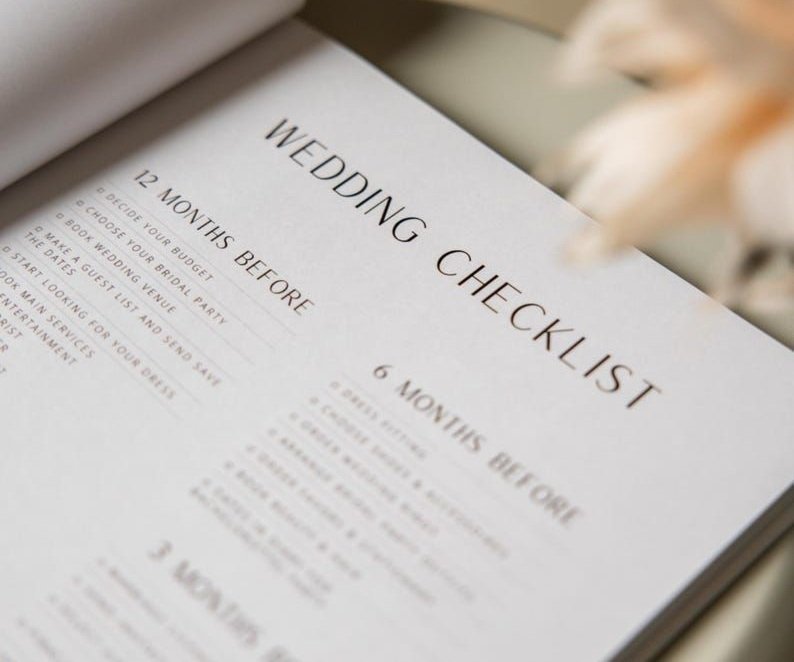
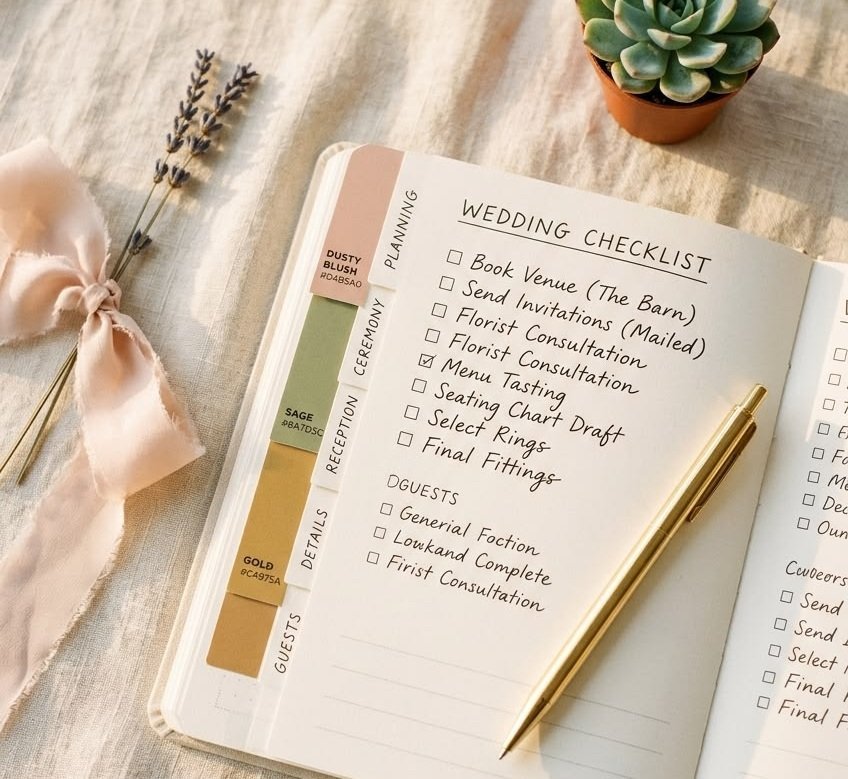
This is the most important document in your toolkit. A master checklist breaks the entire wedding into tasks organised by timeline - from the day of booking to the day after the wedding.
Structure it in phases:
12 months before (or at booking):
- Confirm wedding date, venue, and guest count
- Identify which vendors are already booked
- Build the first draft of the budget
- Start the vendor sourcing list
9-6 months before:
- Book photographer, cinematographer, and decorator (these fill up fastest)
- Finalise venue if not done
- Send save-the-dates
- Book caterer
- Book entertainment (DJ, live band)
- Bridal outfit shopping begins
6-3 months before:
- Finalise decor brief with decorator
- Send invitations
- Book hair and makeup artist
- Confirm accommodation for out-of-town family
- Plan transportation logistics
3-1 month before:
- Final guest count to caterer
- Confirm all vendor bookings in writing
- Collect all vendor contracts and file them
- Plan the mehendi, haldi, and sangeet functions in detail
- Build the wedding day timeline
2 weeks before:
- Final vendor briefing calls
- Confirm day-of logistics (parking, generator, entry time)
- Finalise seating arrangement
- Prepare vendor payment schedule for wedding week
- Prepare day-of kit (more on this below)
Day after:
- Confirm all vendor payments are complete
- Send thank you notes to key vendors
- Request reviews from client
- Archive all documents
Build your checklist in a tool that lets you duplicate it for each new wedding. Google Sheets works. Notion works. A dedicated planner app works. What doesn't work is rebuilding it from scratch for every client.
6. The Budget Tracker
The budget tracker is where most new planners drop the ball. They track the total budget but not the breakdown - and then something comes in over estimate and they don't know where to find the money.
A proper budget tracker has three columns for every line item: estimated cost, actual quoted cost, and amount paid. It also tracks GST separately, because couples frequently forget that a ₹10L decor quote becomes ₹11.2L after tax.
Categories to track:
- Venue (each function separately)
- Catering (per function, including add-ons)
- Decor (per function)
- Photography and cinematography
- Bridal hair and makeup (per function)
- Bridal outfits and groom outfits
- Mehendi artist
- Entertainment (DJ, band, performers)
- Invitations and stationery
- Transportation
- Accommodation
- Miscellaneous and contingency (always 10-15% of total)
- Your planning fee
Update this every time a vendor quote comes in. Show it to the client monthly. A budget tracker that isn't maintained is a liability, not an asset.
7. The Vendor Sourcing Tracker
7. The Vendor Sourcing Tracker
Before you book anyone, you're comparing options. The vendor sourcing tracker is where you log every vendor you contact, what they quoted, and why you did or didn't move forward with them.
Columns to include:
- Vendor name and category
- Contact number and email
- Availability confirmed (yes/no)
- Quote amount (before and after GST)
- Portfolio link or Instagram handle
- Notes from the call or meeting
- Decision (shortlisted / rejected / booked)
This document becomes invaluable over time. After 10-15 weddings, it's a curated database of vendors you've already vetted - which means you spend less time sourcing and more time planning. You can also use Eventam to browse and compare verified vendor profiles across categories and cities as a starting point.
Layer 3 - Vendor Management Documents
Layer 3 - Vendor Management Documents
Coordinating 12-15 vendors across a 3-day wedding is where planning gets genuinely complex. These documents keep it structured.
8. The Vendor Contact Sheet
Every vendor for a wedding on a single sheet. Sounds simple - it is the document you will use the most on wedding day.
Columns:
- Vendor name
- Category (photographer, caterer, decorator, etc.)
- Primary contact name
- Mobile number
- WhatsApp number (often different)
- Arrival time on wedding day
- Location they're reporting to
- Amount due on wedding day (if any)
- Notes
Print this. Have it on your phone. Share it with your assistant. When the baraat is arriving 30 minutes early and you need to tell the dhol players to start now, you don't want to be searching through chats.
9. The Vendor Contract File
9. The Vendor Contract File
Every vendor you book should have a signed contract. Most Indian vendors don't provide them by default - a professional planner creates simple one-page confirmation letters if the vendor doesn't have their own.
A vendor confirmation letter should include:
- Event date and location
- Scope of service (exactly what they're delivering)
- Arrival time and duration
- Total amount, advance paid, and balance due
- Cancellation policy
- Both party signatures
File every vendor contract in a shared folder (Google Drive works well) organised by vendor category. When something goes wrong - and occasionally it will - you need to know exactly what was agreed.
10. The Payment Schedule
10. The Payment Schedule
With 12-15 vendors each having their own payment terms, tracking who needs to be paid what and when is a real operational task.
Build a payment schedule that shows:
- Vendor name
- Total contract value
- Advance paid (amount and date)
- Second instalment (amount and due date)
- Final payment (amount and due date - usually on or just before the wedding day)
- Status (pending / paid / overdue)
Share a version of this with the client monthly so they're never surprised by a large payment coming up. Cash flow surprises are one of the most common sources of client stress in the weeks before a wedding.
Layer 4 - Day-Of Tools
Layer 4 - Day-Of Tools
The wedding day is when your toolkit either saves you or fails you. These are the documents that run the day.
11. The Master Wedding Day Timeline
The timeline is the single most important document on wedding day. It lists every event, every vendor arrival, every ritual, and every transition - minute by minute.
Structure it by function. For a 3-day wedding, you'll have 3-4 separate timelines. Each one should include:
- Vendor arrival times (always 60-90 minutes before guests arrive)
- Decor setup window
- Hair and makeup start times for bride and family
- Ritual timings (haldi, pheras, vidaai) - coordinate with the pandit
- Food service windows
- Entertainment set times
- Photography shot list timings (family photos, couple portraits)
- End time and vendor departure
Build in buffer. Every function in India runs 30-45 minutes behind. If the invitation says 7 PM, build your timeline as if guests arrive at 7:45 PM.
Share the timeline with every vendor 48 hours before the event. A vendor who knows their expected arrival time and their cue is a vendor who doesn't call you 6 times on wedding day.
12. The Day-Of Briefing Document
12. The Day-Of Briefing Document
Separate from the timeline, the briefing document is a one-pager for each vendor summarising what they need to know specifically.
For the photographer: shot list, family combinations for group photos, key moments not to miss, name of the family member who will coordinate family shots.
For the decorator: setup start time, access contact at venue, list of elements per space, anything the family specifically requested.
For the caterer: final confirmed guest count, menu confirmation, live counter timing, dietary requirements to flag.
Sending vendor-specific briefings the day before makes wedding day communication dramatically simpler.
One Thing Most Planners Skip
One Thing Most Planners Skip
The post-wedding debrief.
After every wedding, spend 30 minutes documenting what went wrong and what you'd do differently. Which vendor was difficult? Which timeline assumption was wrong? What did the family ask for that you hadn't anticipated?
Keep these notes in a running document. After a year, it becomes the most valuable thing in your entire toolkit - a personalised guide built entirely from your own experience.
The planners who build the best businesses aren't the ones who had the most talent at the start. They're the ones who got better faster.
Looking for vendors to add to your network? Browse verified photographers, decorators, caterers, venues, and more on Eventam - India's wedding vendor platform.
Looking for vendors to add to your network? Browse verified photographers, decorators, caterers, venues, and more on Eventam - India's wedding vendor platform.